
In your experience, where do legacy industrial facilities in India typically lose the most energy, and why do these inefficiencies often go unnoticed at the operational level?
In my experience, the most significant energy drains in Indian legacy facilities occur at the building envelope. Metal-roofed PEB sheds and warehouses act as massive thermal conductors, where uninsulated or degraded roofing allows intense solar heat to penetrate the workspace. This is further magnified by air leakage through old panel joints and thermal bridging in ducts. Over time, original insulation materials degrade, forcing HVAC systems to overcompensate for heat ingress, which drives up power consumption and accelerates equipment wear.
These inefficiencies remain invisible because they don’t cause immediate downtime. On the factory floor, the focus is production uptime, rather than energy optimization. Moreover, without regular thermal audits or real-time monitoring systems the gradual decline in insulation effectiveness is rarely tracked. Instead, rising energy bills are frequently misattributed to external factors like seasonal weather shifts or tariff hikes, leaving the root structural causes unaddressed.
With increasing cost and sustainability pressures, how do you see retrofitting emerging as a more viable and faster alternative to greenfield modernization for improving energy efficiency?
In the current industrial environment, retrofitting is no longer just an alternative; it is a strategic priority. For many of our clients, the transition from greenfield to brownfield modernization is driven by the need for agility. Retrofitting allows industries to bypass the massive capital expenditure and multi-year timelines of new construction, instead extracting maximum value from existing assets. For instance, by integrating high-performance insulation into current structures, facilities can achieve a “thermal reset” that delivers immediate, measurable reductions in energy overheads without halting production. What makes this approach particularly viable today is its scalability. Retrofitting allows for a phased investment like upgrading critical zones first which aligns perfectly with tight operational budgets and sustainability mandates. In addition to the immediate cost savings, it is the most responsible choice for the environment. By avoiding the embodied carbon footprint of a full rebuild, companies are future-proofing their operations against evolving global ESG standards while maintaining total business continuity.
What role do advanced insulation and protective panel solutions play in improving thermal efficiency, reducing energy losses, and enhancing the lifespan of industrial assets?
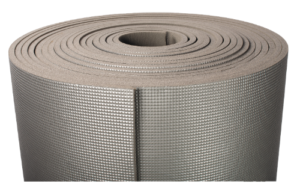
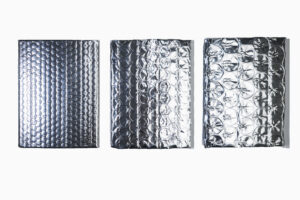
Advanced insulation is the “protective skin” of a high-performance industrial facility. By integrating reflective bubble insulation to deflect radiant heat and XLPE foam to curb conduction, we create a thermal barrier that drastically reduces heat ingress. This synergy doesn’t just lower HVAC loads, it stabilizes the internal environment, turning volatile energy expenses into controlled operational costs. These solutions are essential for the longevity of assets beyond the balance sheet. They prevent corrosion and structural deterioration by eliminating condensation and moisture accumulation, thus significantly extending the building’s lifespan. It is evident that advanced insulation is a strategic investment in both the durability and the efficiency of India’s industrial future when you consider the increase in worker productivity from a tempered atmosphere and the decrease in long-term maintenance.
 Which industrial sectors in India present the greatest opportunity for energy-efficiency gains through retrofit interventions, and why?
In India, retrofit opportunities are greatest where thermal stability is a non-negotiable operational requirement. Sectors such as Warehouses, Logistics, and Automotive manufacturing offer instant ROI, as their massive roof spans are primary heat conductors, retrofitting these sheds provides an immediate and high-impact thermal barrier. Retrofitting is considerably more important in industries that rely heavily on precision, such as textiles, food processing, and pharmaceuticals. These industries must adhere to stringent temperature regulations, where even slight variations might affect the integrity of their products. By retrofitting with high-performance barriers, we don’t just cut energy bills, we stabilize the entire cold chain and production environment, turning energy efficiency into a core competitive advantage.
How should manufacturers evaluate the return on investment for insulation-led retrofits, and what is the typical payback period in real-world industrial scenarios?
ROI for insulation-led retrofits is best evaluated by comparing pre-and post-retrofit energy consumption, specifically tracking HVAC load reduction and monthly cost savings. Beyond immediate energy bills, manufacturers must factor in lowered maintenance costs and extended asset life.
The average payback period in real-world industrial contexts is very short, ranging from six months to two years. For facilities with vast roof areas or in high-temperature areas, this timescale increases considerably, making a thermal upgrade a high-yield financial strategy.
What are the key misconceptions or barriers that prevent plant owners from prioritizing thermal efficiency upgrades in existing facilities?
The biggest barrier is the misconception that insulation is a “day-one” requirement rather than a lifecycle investment. Many plant owners view energy loss as an unavoidable operational cost or assume retrofitting is prohibitively expensive with no immediate ROI. In reality, the cost of
inaction through HVAC strain and structural decay is far higher. By overcoming the lack of awareness regarding modern, scalable insulation technologies, facilities can transform invisible thermal leaks into visible, long-term bottom-line gains.
How can large-scale retrofitting of legacy industrial assets contribute to India’s energy transition and decarbonization goals?
Large-scale retrofitting can play a major role in India’s decarbonization journey. By transforming energy-leaking legacy assets into high-performance structures, we immediately reduce industrial energy demand and lower the carbon footprint of existing infrastructure. This shift not only supports ESG compliance but also diminishes reliance on fossil-fuel-based power. Every insulated roof or sealed thermal bridge represents a permanent reduction in carbon emissions, proving that we don’t need to rebuild our industrial base to achieve a net-zero future, we simply need to optimize the infrastructure we already have.
Do you see energy-efficient retrofitting becoming a standard practice in industrial design and operations, and what changes are needed—at the policy or industry level—to accelerate its adoption in India?
Yes, energy-efficient retrofitting is rapidly transitioning from a “good-to-have” to an industry standard, driven by soaring energy costs and mandatory ESG compliance.
To accelerate adoption in India, we need a two-pronged shift. At the policy level, introducing targeted tax incentives, subsidies for green materials, and mandatory energy audits will turn sustainability from a choice into a fiscal priority. On the industry side, the focus must shift toward documented ROI. By highlighting demonstration projects that utilize advanced materials like Bubble and XLPE insulation, we can prove that high-performance retrofitting isn’t just a cost, it’s a strategic shield against energy volatility. In the end, optimizing our existing legacy assets is the fastest, most capital-efficient route to India’s net-zero goals. It is no longer optional, it is a strategic necessity for any future-ready enterprise.
Click here to read more – Construction Times – Retrofitting Article