
RCC roofs are strong, durable, and widely used across residential, commercial, and industrial buildings. But in India’s hot climate, an exposed concrete roof can also become one of the biggest sources of heat entering a building.
Aerolam XLPE Foam Insulation provides a practical under-deck insulation solution that helps reduce heat transfer through RCC slabs. By installing the insulation below the roof deck, heat can be reduced before it reaches the occupied area.
For both new construction and retrofit projects, XLPE insulation can help improve indoor comfort, reduce the load on cooling systems, and support better energy performance.
Why Does an RCC Roof Need Insulation?
Concrete is good at storing heat. During the day, an RCC roof exposed to strong sunlight gradually absorbs and retains heat. That heat does not disappear when the sun goes down. Instead, the slab can continue releasing heat into the space below for several hours.
This is one reason why rooms on the top floor can remain uncomfortable even during the evening.
When indoor temperatures rise, air-conditioning systems have to work harder to maintain the desired temperature. Over time, this can increase electricity consumption and operating costs.
There are several ways to deal with roof heat, including reflective coatings, thicker construction, or false ceilings. However, these solutions do not necessarily stop heat from moving through the roof slab itself.
Installing insulation beneath the RCC slab provides another approach. The insulation layer acts between the heated roof and the occupied space, helping reduce the amount of heat transferred indoors.


What Is Aerolam XLPE Foam Insulation?
Aerolam XLPE is a chemically cross-linked, closed-cell polyethylene insulation developed for applications such as HVAC systems, under-deck roof insulation, duct insulation, and pipe insulation.
The closed-cell structure is useful in building applications. Unlike open-cell materials, the foam has negligible water and moisture absorption. This helps in reducing the possibility of damp conditions that can contribute to fungal growth.
Aerolam XLPE is manufactured using precision equipment in line with international standards. Its combination of flexibility, low weight, thermal insulation properties, and moisture resistance makes it suitable for different types of projects.
It can be considered for both residential and industrial RCC roofs, depending on the project’s design and insulation requirements.
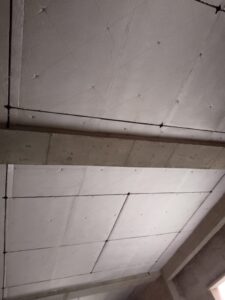
Where Can XLPE Be Used on an RCC Roof?
Aerolam XLPE under-deck insulation can be considered for both new and existing buildings.
For a new RCC structure, the insulation can be incorporated into the roof design during construction. For an existing building, it can be installed as a retrofit solution without the need to remove an existing metal sheet.
The material can also be used on curved roofing applications without requiring an additional support structure.
This makes XLPE useful when the objective is to improve the thermal performance of a existing roof without carrying out major structural changes.
How Does XLPE Insulation Help an RCC Roof?
- Helps Reduce Heat Transfer
An RCC slab exposed to sunlight can become significantly warmer than the space underneath it.
When Aerolam XLPE is installed directly beneath the RCC deck, the insulation layer helps reduce the transfer of heat from the slab into the occupied area.
The closed-cell foam works as a thermal barrier between the heated roof surface and the room below, helping maintain a more comfortable indoor environment.
- Helps Improve Energy Efficiency
Cooling systems have to remove the heat that enters the building.
By reducing the heat transfer through the roof, Aerolam XLPE insulation can help lower the cooling requirement of the building. This can reduce the workload on air-conditioning equipment and contribute to less energy consumption.
The benefit becomes particularly relevant in buildings where cooling systems operate for long hours.
- Lightweight and Durable
One advantage of the Aerolam XLPE insulation sheet is its low weight.
The material adds negligible dead load to the RCC structure while being capable of handling the normal transportation, installation, and construction-site conditions.
The flexibility also makes handling and the installation easier compared with some other rigid insulation materials.
- Helps Resist Moisture and Fungal Growth
Moisture can become a concern when insulation materials absorb water.
Aerolam XLPE has a closed-cell structure with negligible water and moisture absorption. This means the material does not provide the damp environment associated with moisture-absorbing insulation.
As a result, it can help maintain a cleaner and more stable ceiling environment.
Key XLPE Features for Roof Applications
When selecting insulation for an RCC roof, performance on site matters just as much as the basic thermal properties.
Aerolam XLPE offers the following features:
- Negligible water / moisture absorption
- Excellent thermal & acoustic insulation
- Resistance to fungi
- Wide operating temperature range
- Stable K value
- Maintenance free
- Flexible & easy to install
- Ideal for new & existing RCC roofs
These properties make XLPE suitable for projects where thermal insulation, moisture resistance, ease of installation, and long-term performance are important considerations.
Technical Specifications
The following dimensions and tolerances are retained as provided in the Aerolam product information. They are useful for architects, consultants, contractors, and other project professionals when selecting the appropriate product size
Aerolam XLPE Foam — Dimensions & Sizes
Rolls / Sheets / Tubes
| Thickness (mm) | Tolerance (mm) | Width (mtr) | Length (mtr) | Total (SQM) |
| 3 | +/- 0.5 | 1.2 | 100 | 120 |
| 4 | +/- 0.5 | 1.2 | 100 | 120 |
| 5 | +/- 0.5 | 1.2 | 80 | 96 |
| 6 | +/- 0.6 | 1.2 | 70 | 84 |
| 8 | +/- 1 | 1.2 | 50 | 60 |
| 9 | +/- 1 | 1.2 | 45 | 54 |
| 12 | +/- 1 | 1.2 | 30 | 36 |
| 13 | +/- 1 | 1.2 | 30 | 36 |
| 15 | +/- 1.5 | 1.2 | 25 | 30 |
| 19 | +/- 1.5 | 1.2 | 20 | 24 |
| 25 | +/- 1.5 | 1.2 | 16 | 19.2 |
| 30 | (-1.5/+2.5) | 1.2 | 2 | 2.4 |
| 32 | (-1.5/+2.5) | 1.2 | 2 | 2.4 |
| 40 | (-1.5/+3.0) | 1.2 | 2 | 2.4 |
| 45 | (-1.5/+3.0) | 1.2 | 2 | 2.4 |
| 50 | (-2.0/+3.5) | 1.2 | 2 | 2.4 |
Above 50 mm to 140 mm thickness, product in sheet form can be made available on special request. Rolls / sheets / tubes carry a minimum order quantity.
How Sustainable Is XLPE Insulation?
Energy efficiency is only one part of a building’s sustainability strategy. Architects and project consultants are increasingly looking at the environmental credentials of the products being specified.
An Environmental Product Declaration (EPD) provides standardised information about the environmental impact of a product over its lifecycle, covering stages from raw material use through to end of life.
Aerolam XLPE also has GreenPro certification. Together, these credentials provide documented environmental information that can be useful for projects working toward recognised green-building frameworks such as GreenPro Certification, IGBC
There is also a practical energy-efficiency benefit.
When less heat enters a building through the roof, the cooling system may have less work to do. Lower cooling demand can mean reduced electricity consumption during the building’s operational life.
For a building owner, this makes roof insulation more than just a construction material. It can form part of a broader strategy for improving building comfort and energy performance.
What Does This Mean for the Building?
The benefits of insulating an RCC roof are not limited to the roof itself. They can affect the comfort of the occupants and the performance of the building’s cooling system.
More Comfortable Top Floors
Top-floor rooms are often more exposed to solar heat than spaces on lower floors. Reducing heat transfer through the roof can help these areas remain more comfortable.
Lower Cooling Load
When less heat enters the building, air-conditioning systems may not need to work as hard to maintain the required indoor temperature. This can help reduce the operating load on chillers, split AC units, and ducted cooling systems.
Thermal and Acoustic Benefits
XLPE insulation provides both thermal and acoustic insulation. The same foam structure that helps reduce heat transfer can also help dampen sound transmission through the slab.
Reduced Moisture Concerns
Because XLPE has negligible water and moisture absorption, it does not create the damp conditions associated with moisture-absorbing insulation materials.
Suitable for Retrofit Projects
Existing buildings do not always have the option of making major changes to their roof construction.
XLPE under-deck insulation can be installed as a retrofit solution, including beneath an existing metal sheet or RCC deck, helping improve thermal performance without completely removing the existing roof system.
Suitable for Curved Roofs
Roof designs are not always flat or straightforward.Aerolam XLPE can also be installed on curved roofing without additional support, making it adaptable to more complex applications.
Frequently Asked Questions
Can XLPE insulation be installed on an RCC roof after construction?
Yes, Aerolam XLPE under-deck insulation can be used for retrofit applications on existing roofs. It can also be installed over an existing metal sheet without removing the sheet first.
This makes it a practical option for buildings where roof insulation was not included during the original construction.
Does XLPE insulation absorb moisture or promote mould?
XLPE has negligible water and moisture absorption because of its closed-cell structure.
Unlike open-cell bonded insulation materials, it does not create the damp conditions that can support fungal growth.
Is Aerolam XLPE independently certified as sustainable?
Yes, Aerolam XLPE carries GreenPro certification and is verified under the International EPD System. The EPD provides independently assessed environmental impact information for the product.
Final Thoughts
An RCC roof does more than protect a building from the weather. In a hot climate, it can also become a major pathway for heat entering the indoor environment.
Aerolam XLPE Foam Insulation provides a practical way to address this heat transfer from beneath the roof deck. Its closed-cell construction, negligible moisture absorption, lightweight design, flexibility, and thermal insulation properties make it suitable for a wide range of new construction and retrofit applications.
Whether the requirement is for a residential building, commercial property, industrial facility, or an existing RCC structure, proper roof insulation can contribute to better indoor comfort and more efficient cooling.
For projects where energy performance and documented environmental credentials are important, the combination of thermal insulation, GreenPro certification, and EPD verification provides additional value beyond basic roof insulation.
A cooler building starts with controlling heat at the roof.
For more details, visit our official website: https://aerolam.com/
Social Media link.
LinkedIn: https://www.linkedin.com/company/aerolam/
Instagram: https://www.instagram.com/aerolamindia/
Facebook: https://www.facebook.com/aerolam
Email id- contactus@aerolam.com