
For a poultry farm, the roof is much more than a protective cover. It has a direct impact on the temperature inside the shed and, in turn, on bird comfort, productivity, and operating costs.
This was one of the key considerations for the Bengal Poultry Federation while expanding and upgrading its shed infrastructure. Like many commercial poultry facilities, the sheds used GI and metal roofing sheets that provided structural durability but offered limited protection against the intense radiant heat of the sun.
The requirement given to Aerolam was straightforward: reduce heat entering the sheds through the roof without replacing the existing roofing system or disrupting day-to-day operations.
That led to a large-scale rooftop insulation project covering approximately 50,000 sq. mtr.
The Challenge: Heat Building Up Inside the Sheds
Metal roofs are practical, durable, and widely used in poultry housing. However, under the strong sunlight, they absorb significant amounts of solar radiation and transfer heat inside the sheds which cause more head and productivity gets decreased.
Before the insulation upgrade, the sheds faced several challenges commonly associated with uninsulated metal roofing:
- Solar heat absorbed by the roof and radiated into the bird zone.
- Higher risk of heat stress during peak summer conditions.
- Higher dependence on the fans, foggers, and ventilation systems for temperature management.
- Condensation on the underside of the roof during certain conditions, potentially contributing to damp litter.
- Repeated heating and cooling cycles that can place additional stress on the roofing material.
The Solution: Aerolam Bubble Aluminum Foil Insulation
To address these challenge, Aerolam installed Bubble Aluminum Foil Insulation across 50,000 sq. mtr. of shed roofing.
The material was selected as a practical thermal insulation sheet for the existing metal-roof structure. Its reflective aluminum foil surface helps to reflect radiant heat and reducing the amount of solar heat transferred from the roof into inside the shed.
This is particularly relevant for poultry sheds, where controlling radiant heat can play an important role in maintaining a more comfortable indoor environment.
Another advantage was the ability to upgrade the existing roof rather than undertake a complete roofing replacement. This helped make the insulation upgrade more practical for a large, operational facility.
How the Rooftop Insulation Was Installed
The installation was planned around the existing roofing system and the requirements of an active commercial facility.
- Installation Beneath the Roof
The insulation was installed beneath the metal roofing, with an appropriate air space maintained wherever required for the reflective surface to function effectively.
- Joint Sealing
Joints and overlaps were properly addressed using suitable aluminum foil tape to create a more continuous insulation layer across the roof area.
- Existing Ventilation Was Maintained
The insulation system was implemented alongside the existing ventilation arrangements. This is important because roof insulation and ventilation serve different purposes: insulation helps manage heat transfer, while ventilation manages air movement and air exchange.
Together, they can contribute to a more effective poultry-house environment.
What Does 50,000 Sq. Mtr. of Rooftop Insulation Mean?
The scale of this project is what makes it particularly relevant for other poultry operations.
At 50,000 sq. mtr., the insulation covered a substantial roof area across the facility. When a thermal improvement is applied over such a large area, even incremental improvements in heat management can become significant at an operational level.
The use of Bubble Aluminum Foil Insulation can help poultry facilities with:
- Reducing radiant heat entering through the roof.
- Improving thermal comfort inside the shed.
- Helping reduce heat stress during hot weather.
- Potentially reducing the cooling load on ventilation and cooling equipment.
- Supporting better environmental conditions for birds.
- Helping manage condensation under suitable installation conditions.
- Reducing the thermal cycling experienced by the metal roof.
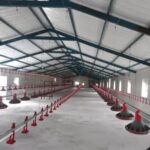
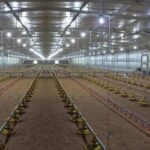
However, actual reductions in the temperature, energy consumption, FCR, or mortality depend on factors such as local climate, shed design, ventilation, bird density, roof orientation, installation quality, and operating practices.
Why Bubble Aluminum foil Insulation Matters in Poultry Farming?
Poultry production is highly sensitive to environmental conditions. During periods of extreme heat, birds can experience heat stress, which may affect feed intake, growth, productivity, and mortality.
This makes the building envelope an important part of poultry-house design.
A suitable Bubble insulation material can help reduce the amount of heat transferred through the roof, while an effective ventilation system helps remove accumulated heat and maintain airflow.
For this reason, Bubble insulation should not be viewed simply as an additional building material. It can be part of a broader strategy for managing the indoor environment.
Why Bubble Aluminum Foil Insulation?
A reflective Bubble aluminum foil surface works differently from conventional insulation materials that primarily slow heat transfer through their thickness.
When correctly installed with the required air space, the reflective surface can help reduce radiant heat transfer from the roof.
For metal-roof poultry sheds, this makes the Bubble Aluminum Foil Insulation a practical option where the objective is to only improve the thermal performance without adding significant structural load to the existing roof.
Key advantages
Reflective Thermal Performance
The aluminum foil surface helps in reflect radiant solar energy before it contributes to build-up inside the shed.
Lightweight Construction
The lightweight nature of the material makes it suitable for retrofit applications where adding substantial structural load is undesirable.
Easy Retrofit Potential
The system can be installed beneath existing metal roofing, making it suitable for upgrading existing sheds without necessarily replacing the entire roof.
Moisture Management
The construction and foil facing can provide resistance to the moisture and water vapor resistance, to the specific product configuration and installation method.
Long-Term Roof Protection
By helping moderate heat transfer and reducing thermal extremes at the roof interface, insulation can contribute to protecting the roofing system over its service life.
A Practical Model for Future Poultry Projects
The Bengal Poultry Federation project demonstrates an important point: thermal upgrades do not always require a complete roof replacement.
For poultry farms operating with existing GI or metal roofing, a carefully designed insulation roof upgrade can be considered as part of a wider thermal-management strategy.
For larger facilities, the potential benefits become even more relevant because the roof area and therefore the amount of solar heat exposure is substantial.
Before selecting an insulation system, however, poultry operators should evaluate:
- Shed dimensions and orientation.
- Existing roofing material.
- Local climatic conditions.
- Roof construction and available air space.
- Ventilation arrangement.
- Cooling systems already in use.
- Bird density.
- Required thermal performance.
- Installation methodology.
- Product thickness and specification.
Project Specification at a Glance
Parameter Project Specification
Project Bengal Poultry Federation
| Application | Poultry Shed Rooftop Insulation |
| Insulation Material | Bubble Aluminum Foil Insulation |
| Thickness | 8 mm & 12 mm |
| Approx. Area Covered | 50,000 sq. mtr. |
| Roof Type | GI / Metal Roofing |
| Application Type | Retrofit / Existing Roof |
| Primary Objective | Reduce Radiant Heat Transfer |
| Facing | Reflective Aluminum Foil |
The Bigger Picture
The Bengal Poultry Federation project is a useful example of how Bubble insulation can be incorporated into an existing poultry infrastructure without replacing the existing shed roof the only option.
With approximately 50,000 sq. mtr. of coverage, the project demonstrates the feasibility of implementing a thermal insulation solution at a large commercial scale.
For poultry producers, the goal is not simply to add another layer to the roof. It also creates a more thermally efficient shed environment that works alongside ventilation and other climate-management systems.
In a business where environmental conditions can influence bird performance and operating costs, the roof deserves careful consideration.
Frequently Asked Questions (FAQ)
- What is rooftop insulation?
Rooftop insulation is an insulation system installed on or beneath a roof to help control heat transfer and improve the thermal performance of a building or industrial structure.
- Is Bubble Aluminum Foil Insulation suitable for poultry sheds?
Yes. It can be used beneath metal roofing to help manage radiant heat entering poultry sheds.
- Can roof insulation be installed without replacing the existing roof?
Yes. The Bengal Poultry Federation project demonstrates a retrofit approach where insulation was installed beneath existing metal roofing.
- Does rooftop insulation replace ventilation?
No. Insulation helps manage heat gain, while ventilation manages airflow, humidity, ammonia, and air exchange.
- What thickness of bubble insulation is suitable for a poultry shed?
The source identifies a 4mm–20mm range, with 8mm used for the Bengal Poultry Federation project. The appropriate thickness should be selected based on the specific application, climate, roof design, and project requirements.
- How does reflective foil insulation work?
Reflective foil insulation helps reduce radiant heat transfer by reflecting radiant energy away from the building when installed with the appropriate air space.
- Where can Bubble Aluminum Foil Insulation be used?
The source identifies applications including roofing, wall insulation, industrial uses, heat exchanger wrapping, and packaging applications.
- What are the benefits of roof insulation for poultry farms?
Potential benefits include improved thermal management, reduced radiant heat gain, lower heat-stress conditions, and potentially reduced dependence on cooling equipment. Actual results depend on site-specific conditions.
- Is bubble insulation available in roll form?
Bubble insulation is commonly supplied in roll form, allowing it to be transported, handled, and cut according to project requirements. The source identifies thickness options generally ranging from 4mm to 20mm.
- How can I plan a large rooftop insulation project?
Project planning should consider roof type, climate, insulation thickness, air-gap requirements, installation method, ventilation, and total roof area. Aerolam can assess these requirements for commercial and industrial projects.
Conclusion
The right bubble Insulation material can protect a poultry farm shed ot only structurally, but the right insulation system can also help manage the heat entering existing shed and can save the extra energy consumption and increase the productivity.
For more details visit our official website: https://aerolam.com/
Social Media link.
LinkedIn: https://www.linkedin.com/company/aerolam/
Instagram: https://www.instagram.com/aerolamindia/
Facebook: https://www.facebook.com/aerolam
Email id- contactus@aerolam.com